


Why Dubai’s Real Estate Market Remains a Safe Haven for Global Investors in 2026

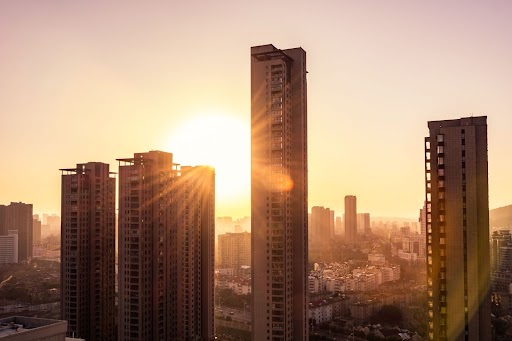
When global markets face uncertainty, investors turn to assets anchored in structural strength. Dubai has consistently demonstrated this capability — not by chance, but through deliberate policy design, economic diversification, and institutional governance. At VINARA International, we track these fundamentals closely.
This article presents a data-led perspective on why Dubai continues to attract long-term capital and why 2026 represents a well-positioned entry environment for serious global investors.
A Market Built on Structural Depth, Not Speculation
Dubai’s economy is no longer defined by a single growth driver. Diversified revenue streams, globally competitive infrastructure, and transparent institutional governance have collectively transformed it into a mature, multi-sector investment destination that performs across economic cycles.
“Dubai recorded a Gross Domestic Product (GDP) of approximately AED 355 billion during the first nine months of 2025, with the economy expanding 4.7% compared to the corresponding period in 2024” (Dubai Media Office, 2026). This growth spanned finance, construction, tourism, and the real estate industry, affirming an economy built on multiple pillars, not singular momentum.
Real estate maintained a strong position within this picture. “The real estate sector grew 6.7% during the first nine months of 2025, contributing 8.2% to Dubai’s GDP” (Dubai Media Office, 2026). These are verified, institutional-grade figures and not just projections. They also define the market’s current standing with accuracy.
How Dubai Responds to Periods of Global Uncertainty
Every market cycle includes periods of external pressure. What consistently distinguishes Dubai is its response: institutional confidence holds, structural fundamentals remain intact, and long-term capital inflows continue on a sound basis.
Global professional services firm Deloitte confirms this trajectory independently. “The emirate’s reputation as a safe haven for investors remains solid, bolstered by a 5% increase in population, record-high residential transactions, and robust economic expansion” (Deloitte, Dubai Real Estate Predictions 2025). This is a verified, independent assessment from one of the world’s most credible professional services organizations.
Deloitte further reports that “gross rental yields grew to 6.7%, reflecting the sustained demand across villas and apartments” (Deloitte, 2025). For yield-focused investors, this is a metric that directly supports the investment thesis regardless of broader market sentiment.
The Five Structural Pillars Behind Dubai’s Investment Case
VINARA International works with investors across the USA, Europe, GCC, and Asia. Five structural factors consistently anchor long-term investment decisions in Dubai:
Why Investors Choose Dubai
- Zero income and capital gains tax: Investors retain full returns on both property appreciation and rental income, placing Dubai among the most capital-efficient investment markets globally.
- 100% foreign ownership: International investors face zero structural barriers to freehold property ownership, with no local partnership requirement.
- UAE Golden Visa through real estate: Qualifying property investors gain long-term UAE residency, delivering mobility, lifestyle, and estate-planning value alongside financial return.
- World-class infrastructure continuity: Airports, banking, logistics, and public services operate at full capacity, maintaining economic flow regardless of any external regional developments.
- Dubai Economic Agenda D33: A government-mandated blueprint to double Dubai’s economy by 2033, signaling sustained, long-range institutional commitment backed by policy.
What the Data Shows in 2026
The table below presents verified economic and real estate indicators defining Dubai’s current investment landscape:
| Indicator | Figure | Source |
| Dubai GDP (Jan–Sep 2025) | AED 355 billion | Dubai Media Office, 2026 |
| GDP Growth Rate (2025 YTD) | 4.7% YoY | Dubai Media Office, 2026 |
| Real Estate Sector Growth | 6.7% | Dubai Media Office, 2026 |
| Real Estate GDP Contribution | 8.2% | Dubai Media Office, 2026 |
| Financial & Insurance Sector Growth | 8.5% (12% GDP share) | Dubai Media Office, 2026 |
| Construction Sector Growth | 8.5% (6.7% GDP share) | Dubai Media Office, 2026 |
| Gross Rental Yields | 6.7% | Deloitte, 2025 |
| International Visitors (Jan–Sep 2025) | 13.95 million (+5% YoY) | Dubai Media Office, 2026 |
“The financial and insurance sector achieved 8.5% growth, contributing 12% to GDP during the first nine months of 2025” (Dubai Media Office, 2026), reinforcing the broad-based economic expansion that underpins sustained real estate demand across all asset classes.
From Momentum to Maturity — Reading the 2026 Market Correctly
The most significant shift in Dubai’s real estate market in 2026 is not a slowdown, but rather it is a maturation. The market is transitioning from velocity-driven growth to a disciplined, fundamentals-led environment where location quality, developer credibility, and long-term value define outcomes above all else.
Global property consultancy Knight Frank captures this precisely. “Dubai’s residential market in 2025 exemplifies the city’s transformation into a diversified, globally competitive hub for real estate investment. Record-high sales volumes, robust price appreciation, and resilient rental performance all point to a market operating from a position of strength rather than exuberance” (Knight Frank, Dubai Residential Market Review Q3 2025).
Knight Frank’s 2026 forward view further projects “price rises of around 3% in the prime segment, while growth in the mainstream market is likely to average around 1% by the end of December 2026” (Knight Frank, 2025). For clients working with VINARA International, this signals a stable, well-defined environment that rewards strategic positioning over reactive decision-making.
Frequently Asked Questions
1.Is Dubai’s real estate market safe for international investors in 2026?
Yes. Verified 4.7% GDP growth, zero capital gains tax, full foreign ownership rights, and Deloitte’s independent “safe-haven” confirmation collectively establish Dubai as one of the most structurally secure real estate investment markets globally.
2.What is the UAE Golden Visa, and how does it relate to property investment?
The UAE Golden Visa grants 5–10 year residency to qualifying property investors with a minimum AED 2 million investment. It extends to immediate family members and provides the right to live, work, and study in the UAE alongside the financial return.
3.How does global uncertainty typically affect Dubai property values?
Dubai’s structural foundations remain stable in uncertain times, according to historical trends. Record residential transactions and 6.7% rental yields, according to Deloitte, they are indicative of an investor base that values long-term positioning over short-term sentiment.
4.What types of investors does VINARA International advise?
VINARA International serves high-net-worth individuals, family offices, and portfolio investors from the USA, Europe, the GCC, and Asia, providing bespoke advisory across Dubai, Abu Dhabi, Ras Al Khaimah, and Saudi Arabia.
5.What rental yields can investors expect in Dubai?
Deloitte’s 2025 report confirms gross rental yields of 6.7%, reflecting sustained demand across villas and apartments as well as a competitive figure relative to most comparable global investment markets.
Let’s Wrap It Up Here
Navigating a dynamic real estate market requires more than data reports — it requires on-ground expertise and a structured advisory framework. At VINARA International, we work with global investors to identify opportunities aligned with their long-term financial and lifestyle goals.
If you are evaluating Dubai’s property market and want clarity over speculation, connect with our advisory team today.